BPBoyden
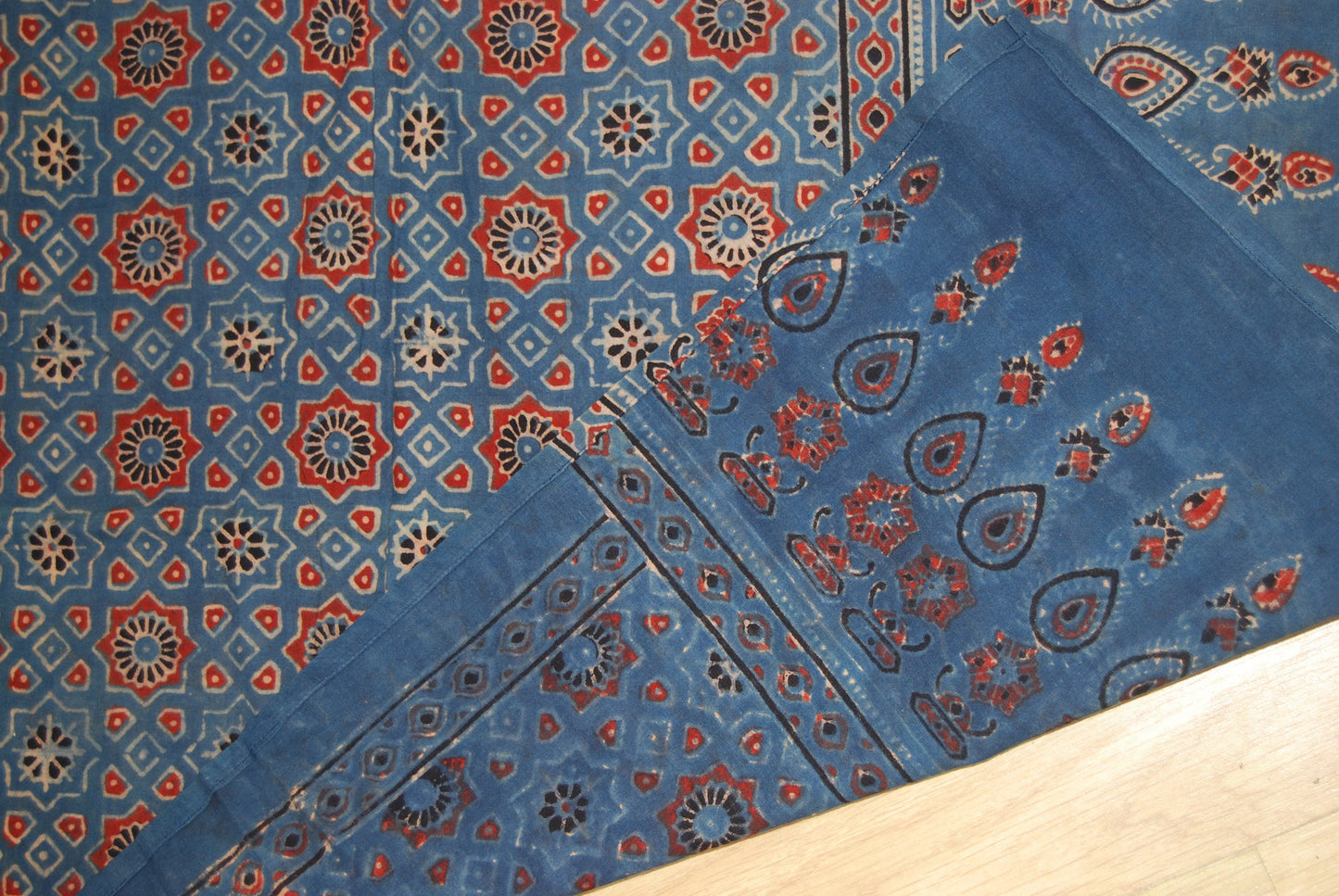
Naturally Dyed Indigo Ajrakh Block Print Cotton Scarf Shawl
Naturally Dyed Indigo Ajrakh Block Print Cotton Scarf Shawl
Couldn't load pickup availability
Naturally dyed Ajrakh block print unisex shawl/scarf.
Sizes may vairy slightly
Ajrak is a block-printed textile that is resist-dyed using natural dyes. including indigo and madder. It is made in Kutch, Gujarat and is distinguished by its color- blue with red — and its complex geometric & floral patterns. It’s name is derived from ‘azarak’, ‘blue’ in Arabic & Persian. Ajrak is a legacy of text. It takes skill & patience to make Ajrak. There are between 14–16 different stages of dyeing & printing, which take 14–21 days to complete. The resulting cloth is soft against the skin and jewel-like in appearance, pleasing to touch & appealing to the eye.
Artifacts related to Ajrakh have been found in the excavated remains from the Indus valley civilizations- Harappa and Mohenjo-Daro. Cloth artifacts with similar dyeing techniques have also been found in the Al-Fostat excavations in the Nile delta near Cairo, Egypt.
Ajrak is said to signify the Universe. Because of the use of color palate. Color red for earth, black for darkness, white for clouds and blue for Universe itself. Think moonless, think midnight, think darkness… the star spangled sky, against a stark blue-black background. This is what ajrakh (aka ajrak), meaning blue in Arabic, is likened to.
Nature plays an important role in the making of Ajrak. The craftsmen work in total harmony with their environment, where the sun, river, animals, trees and mud are all part of its making.
When the world is buzzing with “sustainability” and “environment-friendly” as the newest big trends of the future, for many centuries, innumerable crafts have existed in harmony with nature. Some things so subtle that they do not glare out, yet so vivid that one cannot help but appreciate the aesthetics in their creation. One such craft is the Ajrak.
Traditionally, Ajrak is the name of a block printed cloth with deep crimson red and indigo blue background, bearing symmetrical patterns with interspersed unprinted sparkling white motifs. An ancient craft, the history of the Ajrak can be traced back to the civilizations of the Indus Valley that existed around 2500 BC-1500 BC.
The term “Ajrak”, may be derived from “Azrak”, meaning blue in Arabic, as blue happens to be the one of the principal colours in Ajrak printing. More than a fabric, Ajrak is a Sindhi tradition; found in daily usage such as hammocks and bedsheets to duppattas, scarves, and even gifts as a token of respect. The highly valued Ajrak has also been made in Kutchfor the Maldharis or cattle herders’ communities since the time Khatris migrated from Sindh in the 16th century. The Khatri community, whose name means “one who fills or changes colours,” printed cloth with the locally available natural dyes and water from the Dhamadka, the river that gave their village its name. Today the ajrak traditions are maintained in Kutch, and in Khavda, Dhamadka and Barmer in Rajasthan.
It is the synergy between handloom textiles and vegetable dyes that creates magic. The introduction of chemical dyes led to the decline of natural dyes towards the end of the nineteenth century. Ajrakh printing, using natural dyes is one of the oldest techniques of resist printing in India and is one of the most complex and sophisticated methods of printing.
Share